
Professional Fabric Scissors: The Ultimate Guide to Sewing Shears
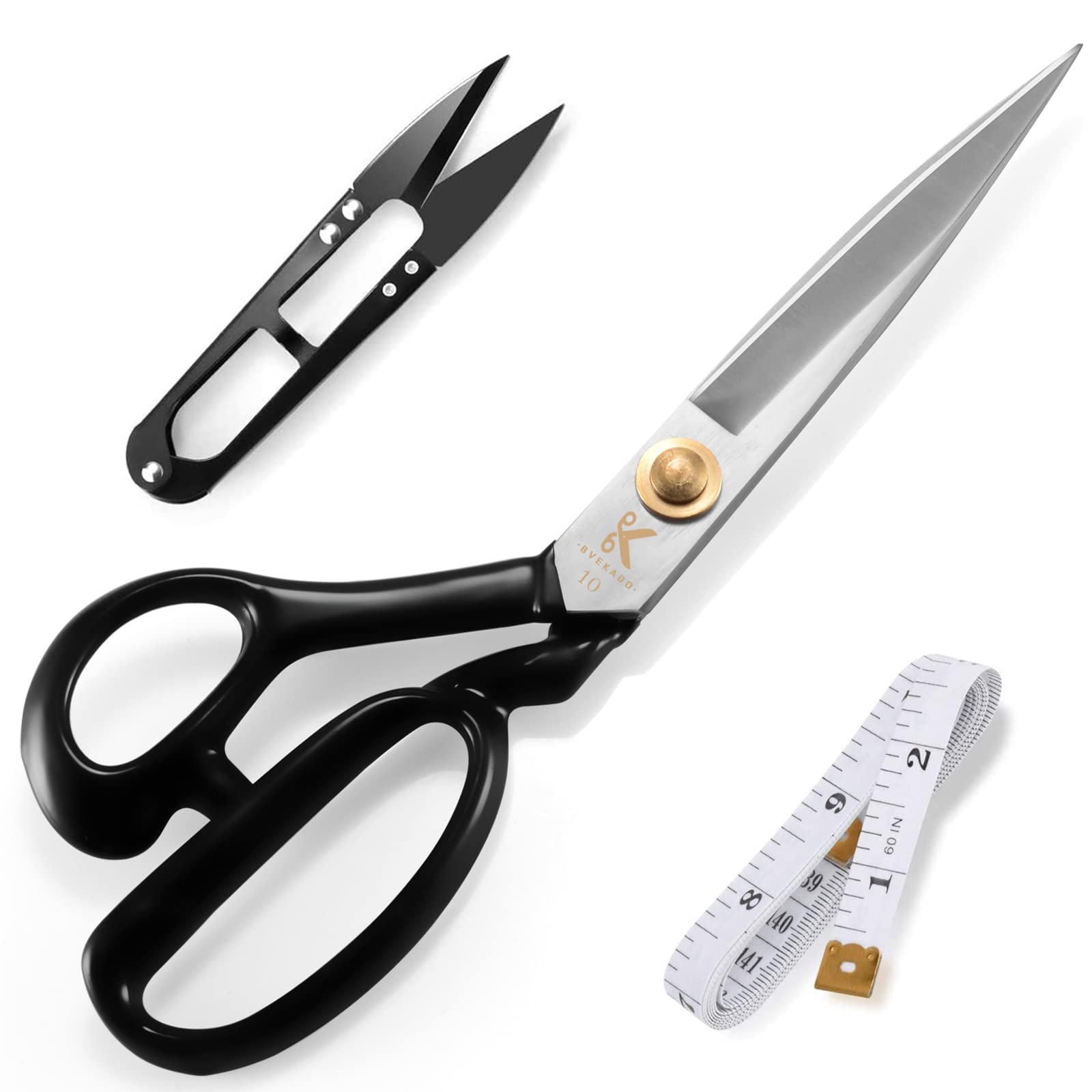
Professional Dressmaker’s Shears – 10 Inch
Premium forged steel fabric scissors designed for professional seamstresses and serious crafters. Features razor-sharp blades that glide through multiple fabric layers with precision. Ergonomic handles reduce hand fatigue during extended cutting sessions. Perfect for pattern cutting, quilting, and detailed fabric work requiring clean, accurate cuts.
Key Features:
- Forged steel blades for durability
- 10-inch length for long, smooth cuts
- Ergonomic soft-grip handles
- Precise blade alignment
- Lifetime sharpening guarantee
- Professional-grade construction
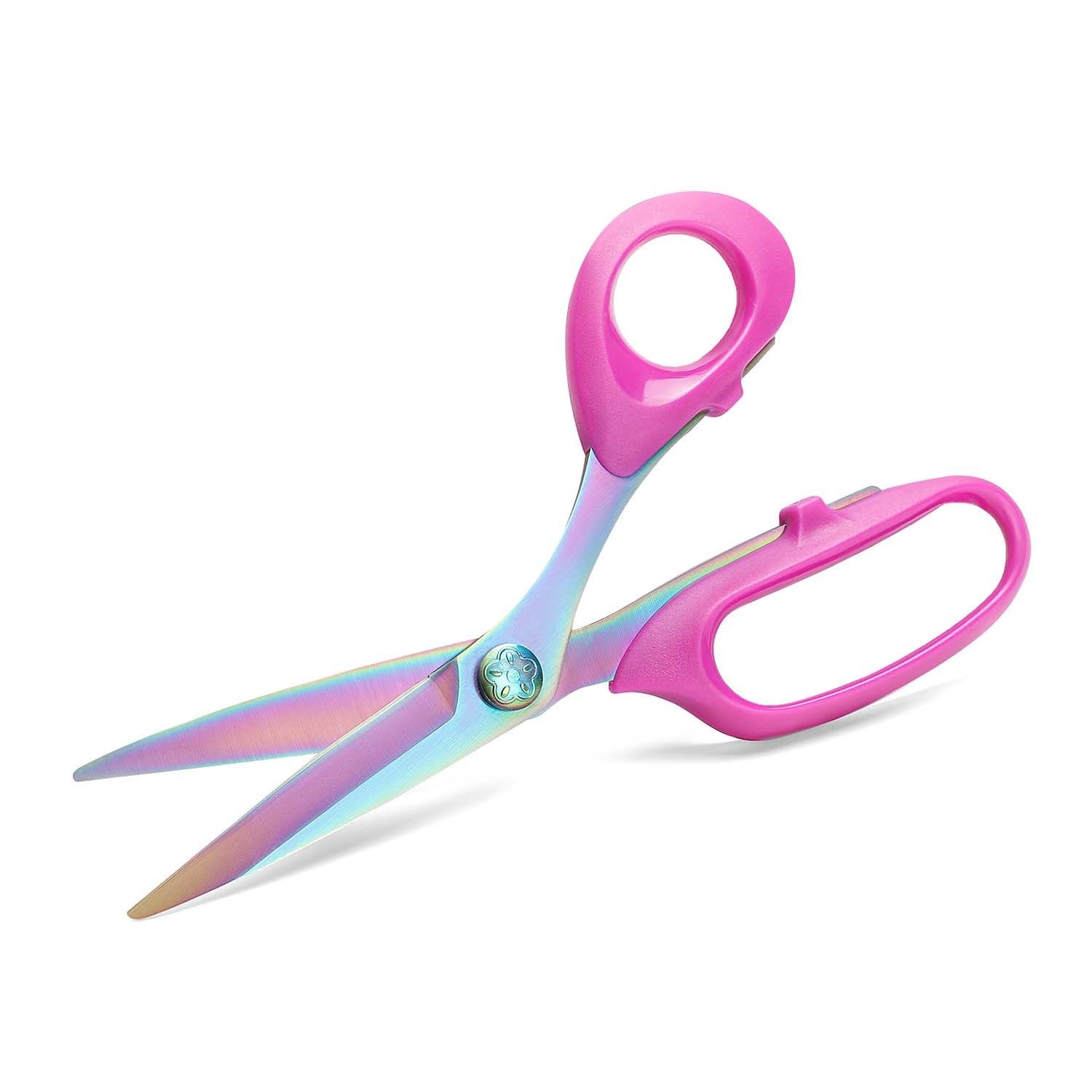
Titanium-Coated Fabric Shears – 8 Inch
Advanced titanium-coated fabric scissors that stay sharper three times longer than traditional steel blades. Non-stick coating prevents adhesive buildup and reduces friction for effortless cutting. Lightweight design with comfort grips makes these ideal for quilters and crafters who cut frequently. Excellent for synthetic fabrics, cotton, and mixed materials.
Key Features:
- Titanium coating for extended sharpness
- Non-stick surface prevents buildup
- Lightweight 8-inch design
- Comfort-grip handles
- Corrosion-resistant blades
- Ideal for synthetic fabrics
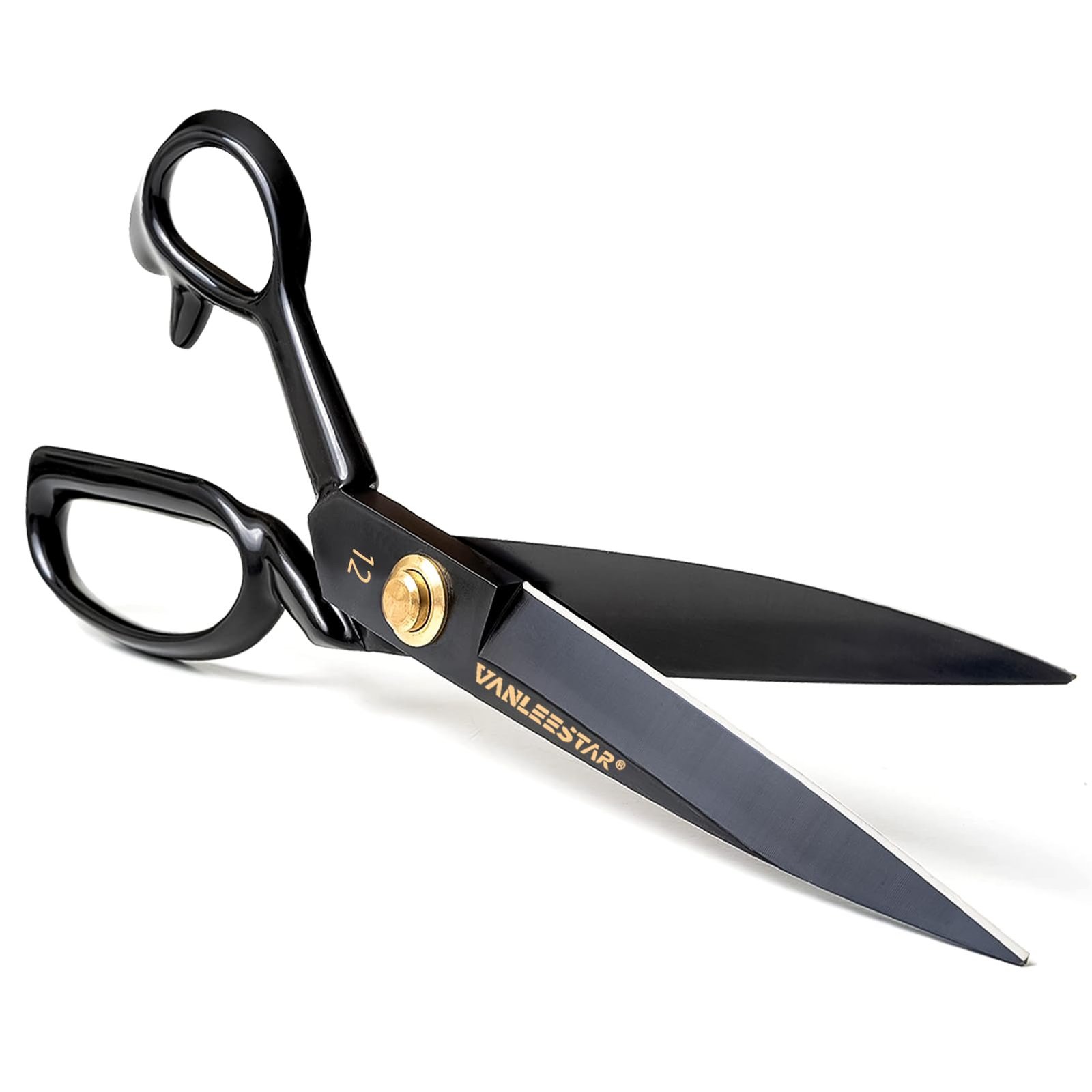
Heavy-Duty Tailor Shears – 12 Inch
Extra-long fabric scissors built for cutting thick materials and multiple fabric layers simultaneously. Professional-grade steel construction with reinforced pivot point ensures consistent performance. Designed specifically for tailors and garment makers working with heavy woolens, denim, and upholstery fabrics. Traditional bent-handle design provides optimal cutting angle and control.
Key Features:
- 12-inch blades for maximum cutting power
- Heavy-duty steel construction
- Reinforced pivot point
- Traditional bent-handle design
- Cuts through thick materials
- Professional tailor specifications
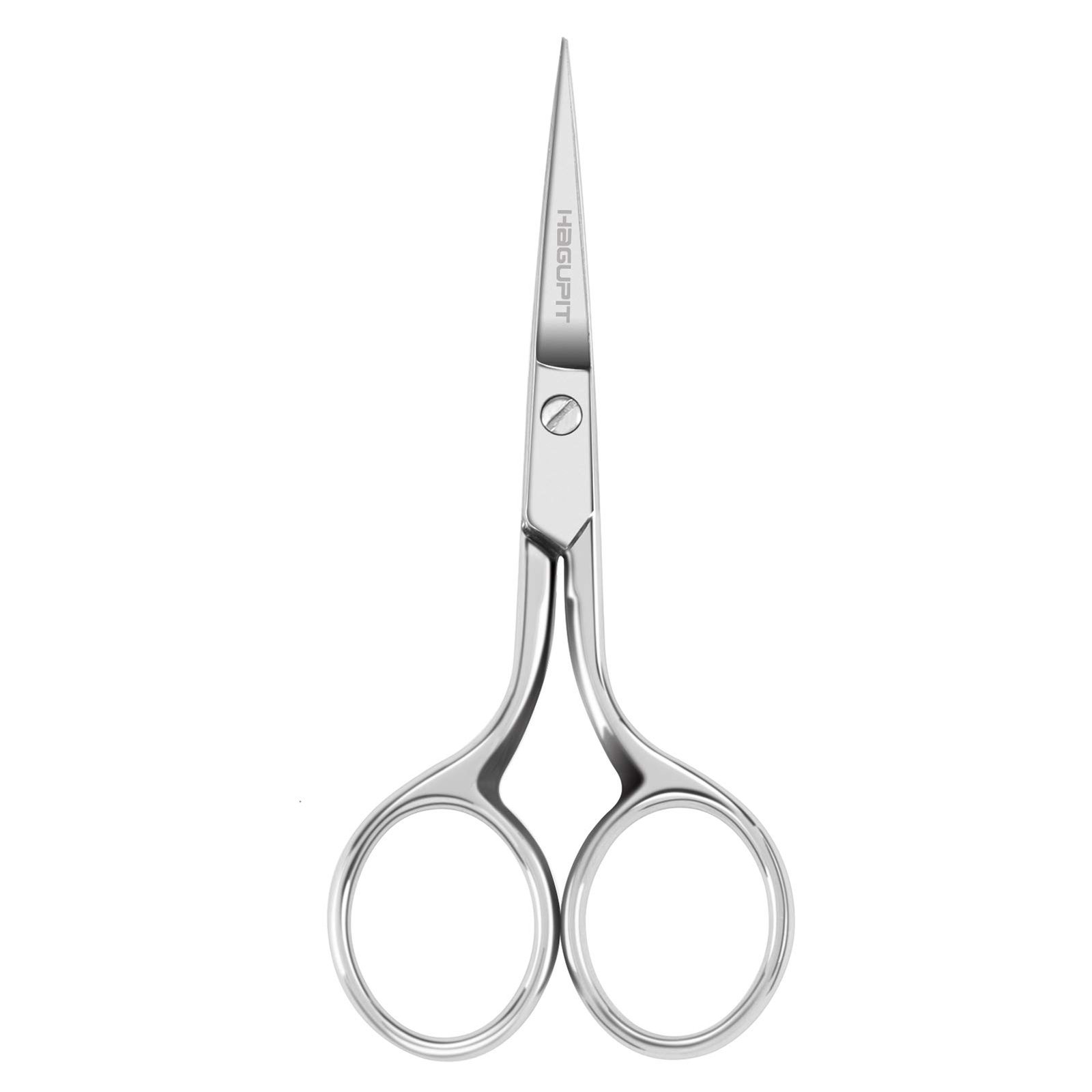
Precision Embroidery Scissors – 4 Inch
Small, sharp fabric scissors perfect for detailed work and precision cutting tasks. Fine-pointed blades allow accurate trimming of threads, small fabric pieces, and intricate appliqué work. Stainless steel construction with smooth action makes these essential for embroidery, quilting details, and craft projects requiring careful, controlled cuts.
Key Features:
- Fine-pointed precision blades
- 4-inch compact size
- Stainless steel construction
- Smooth cutting action
- Perfect for detail work
- Essential for embroidery projects
Understanding Quality Fabric Scissors and Their Importance
Quality fabric scissors are the foundation of successful sewing projects, making the difference between clean, professional results and frustrating, frayed edges. Professional fabric scissors feature precision-engineered blades that maintain their sharpness longer and cut through various materials with ease.
The construction quality of fabric scissors directly impacts your cutting accuracy and project outcomes. Premium shears use high-carbon steel or titanium-coated blades that resist dulling and provide consistent performance across thousands of cuts.
Key Features That Define Professional Fabric Scissors
Professional-grade fabric scissors incorporate several essential features that distinguish them from ordinary scissors. The blade angle, handle ergonomics, and pivot mechanism all contribute to cutting performance and user comfort.
Sharpness retention is crucial for fabric scissors, as dull blades can damage delicate fabrics and create uneven cuts. Quality materials and proper heat treatment ensure blades maintain their cutting edge through extensive use.
Types of Fabric Scissors for Different Sewing Projects
Different sewing projects require specific types of fabric scissors to achieve optimal results. Dressmaker’s shears, typically 8-10 inches long, are versatile fabric scissors suitable for most cutting tasks and pattern work.
Tailor shears, usually 12 inches or longer, provide extra leverage for cutting thick materials like wool, denim, and multiple fabric layers. These heavy-duty fabric scissors feature reinforced construction to handle demanding cutting tasks.
Specialty Fabric Scissors for Specific Applications
Embroidery scissors offer precision cutting for detailed work, thread trimming, and small fabric pieces. These compact fabric scissors typically measure 3-4 inches and feature fine, sharp points for accuracy.
Pinking shears create zigzag edges that prevent fraying, making them valuable fabric scissors for finishing seams and decorative edges. The serrated blades require special maintenance but provide unique cutting capabilities.
Choosing the Right Size Fabric Scissors
Scissor size affects cutting efficiency and user comfort during extended sewing sessions. Longer fabric scissors make smoother cuts on large fabric pieces but require more hand strength to operate effectively.
Shorter fabric scissors offer better control for detailed work but may create more cutting seams on long fabric pieces. Most sewers benefit from owning multiple sizes of fabric scissors for different applications.
Blade Materials and Construction in Fabric Scissors
The blade material significantly impacts the performance and longevity of fabric scissors. High-carbon steel blades offer excellent sharpness and edge retention, making them popular for professional fabric scissors.
Stainless steel provides corrosion resistance and easy maintenance, though it may not hold an edge as long as carbon steel. Many modern fabric scissors combine different materials to optimize performance characteristics.
Titanium Coatings and Advanced Blade Technologies
Titanium-coated fabric scissors stay sharper longer and resist adhesive buildup from interfacing and fusible materials. The coating also reduces friction, making cutting smoother and requiring less hand pressure.
Some fabric scissors feature ice-hardened blades or special tempering processes that enhance durability and cutting performance. These manufacturing techniques create superior fabric scissors that justify their higher cost through extended service life.
Understanding Blade Geometry and Cutting Action
Blade geometry affects how fabric scissors perform with different materials. Convex blades create a slicing action that works well with delicate fabrics, while straight blades provide more cutting force for heavy materials.
The angle between the blades influences cutting precision and effort required. Properly designed fabric scissors balance cutting force with smooth operation to minimize hand fatigue during extended use.
Proper Maintenance and Care for Fabric Scissors
Regular maintenance keeps fabric scissors performing at their best and extends their useful life significantly. Proper storage, cleaning, and sharpening practices preserve the precision and sharpness that make quality fabric scissors valuable tools.
Never use fabric scissors for cutting paper, cardboard, or other materials that can dull the blades quickly. Designate your fabric scissors exclusively for fabric cutting to maintain their sharpness and performance.
Cleaning and Storage Best Practices
Clean fabric scissors regularly to remove lint, adhesive residue, and fabric oils that can affect cutting performance. Use a soft cloth and mild solvent to clean blades, then dry thoroughly to prevent corrosion.
Store fabric scissors in protective cases or blade guards to prevent damage and maintain sharpness. Proper storage also prevents accidents and keeps fabric scissors ready for immediate use.
Sharpening and Professional Service
Professional sharpening maintains the original blade geometry and cutting performance of fabric scissors. Attempting to sharpen quality fabric scissors at home can damage the blade angles and reduce cutting effectiveness.
Many manufacturers offer sharpening services for their fabric scissors, ensuring proper maintenance that preserves the tool’s original performance characteristics. Regular professional sharpening keeps fabric scissors cutting like new for years.
Ergonomics and Comfort Features in Modern Fabric Scissors
Comfort features in fabric scissors reduce hand fatigue and prevent repetitive stress injuries during extended cutting sessions. Ergonomic handles, proper weight distribution, and smooth cutting action all contribute to user comfort.
Soft-grip handles and thumb rests provide additional comfort for users who cut frequently. These features make fabric scissors more comfortable to use and can prevent hand cramps during long sewing sessions.
Handle Design and Weight Distribution
Well-designed fabric scissors balance cutting power with comfortable handling. The weight distribution should feel natural in your hand, with the pivot point positioned for optimal leverage and control.
Bent-handle designs in traditional fabric scissors position the fabric flat on the cutting surface while keeping your hand elevated. This design reduces strain and improves cutting accuracy for most users.
Left-Handed Options and Universal Designs
Left-handed fabric scissors feature reversed blade positions that provide proper cutting visibility and blade alignment for left-handed users. Using right-handed fabric scissors as a left-handed person can lead to poor cutting results and hand discomfort.
Some fabric scissors feature ambidextrous designs that work well for both right and left-handed users. These versatile fabric scissors offer flexibility in shared sewing spaces or multi-user environments.
Selecting the Best Fabric Scissors for Your Needs
Choosing the right fabric scissors depends on your sewing projects, cutting frequency, and personal preferences. Consider the types of fabrics you work with most often and the cutting tasks you perform regularly.
Budget considerations should balance initial cost with long-term value, as quality fabric scissors last for decades with proper care. Investing in good fabric scissors often proves more economical than repeatedly replacing cheaper alternatives.
Evaluating Quality and Performance Features
Test fabric scissors before purchasing when possible, checking for smooth action, comfortable grip, and proper blade alignment. Quality fabric scissors should cut cleanly without catching or dragging on fabric.
Read reviews and recommendations from other sewers to understand real-world performance of different fabric scissors models. Professional seamstresses and quilters often provide valuable insights about scissor performance and durability.
Building a Complete Fabric Scissors Collection
Most serious sewers benefit from owning multiple fabric scissors for different tasks. A basic collection might include 8-inch dressmaker shears, 4-inch embroidery scissors, and pinking shears for finishing work.
Gradually building a collection of specialized fabric scissors allows you to choose the perfect tool for each cutting task, improving both efficiency and results in your sewing projects.
Frequently Asked Questions
Investing in Quality Fabric Scissors for Superior Sewing Results
Quality fabric scissors are essential tools that directly impact the success of your sewing projects and crafting endeavors. The precision, durability, and performance of professional fabric scissors justify their cost through years of reliable service and superior cutting results. Whether you’re a professional seamstress, dedicated quilter, or passionate hobbyist, investing in the right fabric scissors will enhance your work and make cutting tasks more enjoyable.
Choosing the appropriate fabric scissors for your specific needs requires considering factors like blade material, size, ergonomics, and intended use. The variety of available fabric scissors ensures there’s a perfect tool for every cutting task, from delicate embroidery work to heavy-duty tailoring projects. Building a collection of quality fabric scissors over time provides you with specialized tools that optimize your cutting efficiency and results.
Proper maintenance and care ensure your fabric scissors continue performing at their peak for many years. Regular cleaning, appropriate storage, and professional sharpening preserve the investment you’ve made in quality tools. Remember that fabric scissors perform best when used exclusively for fabric cutting, so resist the temptation to use them for other materials that can damage their precision-engineered blades.
The satisfaction of working with sharp, well-designed fabric scissors transforms cutting from a chore into a pleasure, making every sewing project more enjoyable and successful. Quality fabric scissors are tools that serious sewers rely on throughout their crafting journey, providing consistent performance that enhances creativity and enables professional-quality results in every project.